
Supplier network
We work with multiple international suppliers to match product, specification, origin preference, lead time, packaging, and price target.
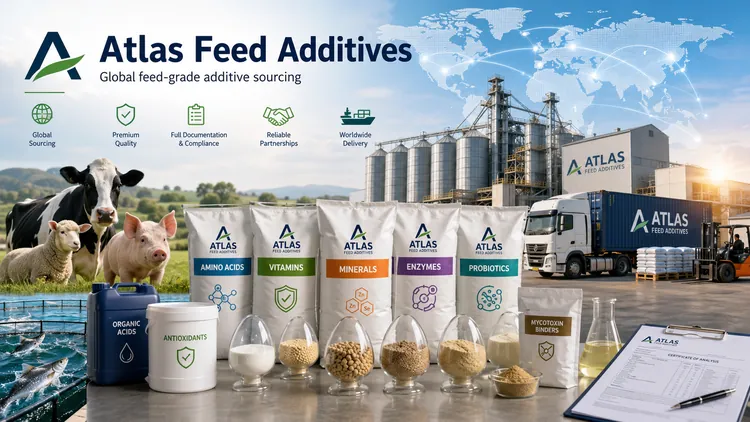
Global feed-grade additive sourcing
Atlas Feed Additives connects feed mills, premix manufacturers, integrators, distributors, and livestock businesses with reliable feed-grade additive supply options from a qualified global supplier network.
From amino acids, vitamins, minerals, enzymes, probiotics, organic acids, antioxidants, and mycotoxin binders to pigments, palatability tools, silage additives, and specialty programs, our role is to help buyers compare product options, verify specifications, coordinate documentation, and move from inquiry to shipment readiness with confidence.
Why Atlas
Feed additive procurement is not only about finding the lowest price. Buyers also need verified specifications, dependable origin options, batch-level paperwork, suitable packaging, clear lead times, responsive communication, and a supplier network that understands international shipments.
Atlas Feed Additives works as a practical sourcing partner for companies that want to evaluate multiple supply options without losing time in scattered communication. We help translate your technical requirement into a structured commercial inquiry and follow up with options that match your product target, quantity, documentation needs, and delivery expectations.
We work with multiple international suppliers to match product, specification, origin preference, lead time, packaging, and price target.
We coordinate available specifications, certificates, safety documents, origin information, shelf-life data, and shipment documents according to the request.
Our portfolio covers nutritional, technological, sensory, zootechnical, and specialty feed additive groups for practical feed formulation needs.
Send your inquiry by email, form, phone, or WhatsApp and receive a structured follow-up with the details needed for purchasing decisions.
Procurement support
Atlas Feed Additives is designed for buyers who need a reliable commercial partner, not just a product list. Our role is to help you compare supply options, organize documents, clarify technical details, and move from inquiry to supply with confidence.
We support one-time spot inquiries, repeat purchasing programs, tender-style quotation requests, distributor supply needs, and product-development searches for feed manufacturers and premix companies.
Start an inquiryCore product areas
Our sourcing discussions can cover a wide range of feed-grade additive groups used in compound feed, premixes, concentrates, mineral feeds, liquid applications, silage programs, and species-specific nutrition plans.
Common sourcing discussions include lysine, methionine, threonine, tryptophan, valine, arginine, isoleucine, and other amino-acid or nitrogen-support tools used to balance protein quality and support efficient feed formulation.
We can discuss fat-soluble and water-soluble vitamins, vitamin premix components, choline sources, biotin, folic acid, niacin, pantothenic acid, and related nutrients used in premix and feed production.
Options may include inorganic and organic mineral sources, chelates, complexes, glycinates, hydroxy trace minerals, selenium sources, and other products used to meet species-specific mineral requirements.
Macro-mineral and electrolyte sourcing may include calcium, phosphorus, magnesium, sodium, potassium, chloride, bicarbonate, and buffering materials for feed, premix, and livestock programs.
Enzyme discussions can include phytase, xylanase, beta-glucanase, cellulase, protease, amylase, mannanase, multi-enzyme blends, and coated or thermostable products for pelleting conditions.
We can discuss microbial feed additives, fermentation products, yeast derivatives, Bacillus-based products, lactic-acid bacteria, and gut-support programs for different animal categories.
Potential sourcing areas include MOS, FOS, beta-glucans, yeast cell wall fractions, fiber-based tools, and specialty products used in digestive-support and performance-oriented feed concepts.
Acidifier discussions may include formic, propionic, lactic, citric, fumaric, sorbic, benzoic, butyric, and blended acid products in powder, liquid, coated, buffered, or carrier-based forms.
We can discuss products used to support feed hygiene, raw-material storage, mold control, moisture management, grain preservation, and finished-feed shelf-life protection.
Antioxidant programs may include natural and synthetic options used to help protect fats, oils, premixes, vitamins, pigments, and finished feed from oxidative degradation.
Options can include mineral binders, yeast-cell-wall products, activated materials, enzyme-oriented solutions, and broad-spectrum programs designed for raw-material risk management.
We can discuss carotenoids, natural pigments, color-support tools, flavors, sweeteners, aroma products, and palatability enhancers for poultry, aquaculture, young-animal, and pet-related applications.
Who we serve
Every buyer has different priorities. A feed mill may need stable volume and fast documentation. A premix company may need precise active content and clean technical files. A distributor may need competitive pricing, origin flexibility, and export-ready paperwork. Atlas Feed Additives supports these different requirements with a practical, inquiry-based service model.
Support for compound feed producers looking for additives that fit cost targets, formulation needs, storage realities, and production schedules.
Support for premix manufacturers requiring clear specifications, consistent active levels, reliable particle form, and suitable packaging.
Support for poultry, ruminant, swine, and aquaculture integrators that need dependable supply for large-scale feeding programs.
Support for regional distributors seeking competitive sources, shipment coordination, and a wider portfolio for local customer demand.
Application coverage
Different production systems require different additive strategies. Atlas Feed Additives can help buyers discuss species-specific needs, product form, dosage logic, premix compatibility, stability, and commercial availability.
Product discussions may include amino-acid balancing, enzyme programs, gut-support additives, pigments, electrolytes, mold inhibitors, antioxidants, and mycotoxin-risk tools for broilers, layers, breeders, and turkeys.
Relevant sourcing areas can include buffers, protected nutrients, yeast products, mineral programs, silage inoculants, mold control, toxin-risk management, and rumen-support additives for dairy and beef systems.
Common priorities include amino acids, acidifiers, flavors, sweeteners, gut-support additives, mineral sources, enzyme programs, and additives for starter, grower, finisher, sow, and piglet feeds.
Discussions can include attractants, palatability tools, antioxidants, pigments, mineral sources, binders, enzyme products, and stability-focused additives for aquatic feed applications.
Depending on product and market rules, sourcing discussions may include palatability tools, yeasts, antioxidants, fibers, minerals, vitamins, and specialty ingredients for pet-related nutrition programs.
We can discuss silage inoculants, organic-acid blends, fermentation-support products, mold-control tools, and forage-preservation options for ruminant operations.
Quality and paperwork
For international feed additive purchasing, paperwork is part of the product. Atlas Feed Additives helps coordinate available supplier documentation so buyers can evaluate product suitability before confirming an order.
Depending on the product, supplier, destination, and order status, documentation may include product specifications, certificates of analysis, safety data sheets, technical data sheets, shelf-life statements, storage guidance, origin information, packing lists, invoices, transport documents, and other requested commercial papers.
Final supply is always subject to product availability, destination-market rules, documentation requirements, permitted uses, and customer specifications.
Commercial coordination
Our purchasing process is built around clear communication. Instead of sending a vague product list, we aim to identify the specific grade, active content, quantity, origin option, packaging, delivery term, documentation needs, and destination requirements behind each inquiry.
This approach helps buyers compare alternatives more efficiently and helps suppliers respond with relevant offers rather than incomplete quotations.
We review the requested product name, grade, active level, carrier, physical form, and key quality parameters before checking supplier options.
Depending on the product, options may include bags, cartons, drums, totes, big bags, liquid containers, palletized loads, or container quantities.
We help clarify whether the offer is based on available stock, planned production, supplier lead time, or shipment scheduling.
We consider destination country, documentation needs, import expectations, transport route, and customer requirements during quotation discussions.
Service process
You send the product name, specification target, quantity, destination, preferred packaging, shipment timing, and required documents.
We review product fit, feed-grade suitability, available supplier options, documentation requirements, and commercial feasibility.
We contact suitable supply sources and clarify specification, availability, origin, packaging, lead time, price basis, and document availability.
We return with a clear offer or sourcing update that helps your team compare options and decide the next step.
When an order is confirmed, we coordinate order details, proforma information, document flow, packaging confirmation, and shipment preparation.
For repeat buyers, we can discuss forecast planning, alternative sources, annual demand, repeat documentation, and product portfolio expansion.
Buyer checklist
Feed additive names can vary by supplier, country, concentration, carrier, coating technology, and permitted application. A complete inquiry helps reduce misunderstandings and speeds up quotation.
If you are not sure which product form or specification is best for your application, send your current product label, previous specification, target use, or formulation requirement. Our team can use that information to guide the sourcing discussion and ask the right follow-up questions.
Global sourcing perspective
International feed additive markets can change quickly because of raw-material availability, energy costs, production schedules, shipping capacity, currency movement, and regional demand. Working with multiple suppliers helps buyers evaluate alternatives when a preferred source is unavailable or commercially unsuitable.
Atlas Feed Additives can discuss different origin options, product forms, and supplier routes where available. We focus on practical supply, clear documentation, and commercial transparency so purchasing teams can make informed decisions.
Support for urgent or one-time requirements when buyers need availability, price, and document checks quickly.
Support for monthly, quarterly, or annual purchasing programs where stable communication and consistent documentation matter.
Support for buyers seeking a second source, new origin option, different packaging, or a commercially more competitive route.
Support for distributors and feed companies that want to broaden their additive portfolio with complementary products.
Product-function overview
A feed additive may be selected for a nutritional role, a technological function, a sensory effect, a zootechnical objective, or a specialty risk-management program. Correct product selection depends on the animal category, feed type, formulation target, processing conditions, and local market rules.
Includes nutrients and nutrient-like tools such as vitamins, amino acids, trace elements, macro minerals, and electrolytes used to meet formulation targets.
Includes products used for preservation, antioxidant protection, acidity regulation, flowability, pelleting support, silage preservation, and feed-quality management.
Includes flavors, sweeteners, colorants, pigments, aroma tools, and palatability enhancers that support intake, product identity, or visual feed and animal-product characteristics.
Includes products such as enzymes, gut-flora stabilizers, digestibility enhancers, and performance-support tools used within permitted applications and species programs.
Includes mycotoxin-risk tools, mold-control programs, antioxidant systems, feed-hygiene support, and storage-related additives for raw materials and finished feed.
Some additives and applications may be market-specific or subject to special authorization. Availability is reviewed case by case according to the product and destination.
Atlas Feed Additives does not assume that every additive is permitted in every market, species, dosage, or application. Final product use depends on local regulation, customer responsibility, label instructions, and professional formulation decisions.
We also do not replace veterinary, regulatory, or nutritionist advice. Our service focuses on sourcing, commercial coordination, documentation flow, and export-focused communication.
Responsible supply
Feed additives are technical products. Their suitability depends on feed type, target species, production stage, inclusion level, processing conditions, storage environment, and destination-market requirements.
Before confirming supply, buyers should review the product specification, label information, regulatory status, intended use, and any required local approvals. Atlas Feed Additives helps coordinate the commercial and documentation side of that review.
Questions
Atlas Feed Additives coordinates feed-grade additive supply from qualified global sources for feed mills, premix producers, integrators, distributors, and livestock businesses.
We can discuss amino acids, nitrogen nutrients, vitamins, vitamin-like nutrients, trace minerals, macro minerals, electrolytes, enzymes, probiotics, fermentation products, prebiotics, organic acids, preservatives, mold-control products, antioxidants, mycotoxin binders, pigments, palatability tools, silage additives, and specialty programs.
No. The company is located in Ankara, Turkey, while the service model is designed for international customers and supplier networks.
Please send the product name, target specification, quantity, destination country, preferred packaging, required documents, shipment timing, and delivery-term preference. If available, include a previous specification, label, certificate of analysis, or target price.
Yes. When multiple options are available, Atlas Feed Additives can help compare origin, specification, packaging, lead time, documentation, and commercial conditions so your purchasing team can evaluate practical alternatives.
We can discuss sample-stage inquiries, trial orders, pallet quantities, container loads, repeat supply programs, and distributor portfolio needs. Final feasibility depends on the product, supplier minimums, destination, and documentation requirements.
Depending on the product and supplier, buyers may request specification sheets, certificates of analysis, safety data sheets, technical data sheets, origin information, shelf-life statements, storage guidance, labels, packing details, and shipment documents.
No. Availability and permitted use depend on destination-market rules, product authorization, label requirements, species application, supplier documentation, and buyer responsibility. We review these points during the inquiry process.
When speed is important, please include the required shipment date, destination, minimum acceptable specification, and whether alternatives are acceptable. We can then check practical options more efficiently.
Atlas Feed Additives focuses on sourcing, quotation, documentation, and supply coordination. Product use, inclusion level, species suitability, and regulatory compliance should be confirmed by the buyer’s nutritionist, veterinarian, or regulatory specialist.
Request a quotation
Send your product list, target specification, destination country, packaging preference, required documents, shipment timing, and delivery-term preference. Our team will review your request and respond from orders@feedgradeadditives.com.
For faster evaluation, include any available technical sheet, certificate of analysis, previous supplier specification, target active content, preferred origin, or annual demand estimate.